 EN
EN

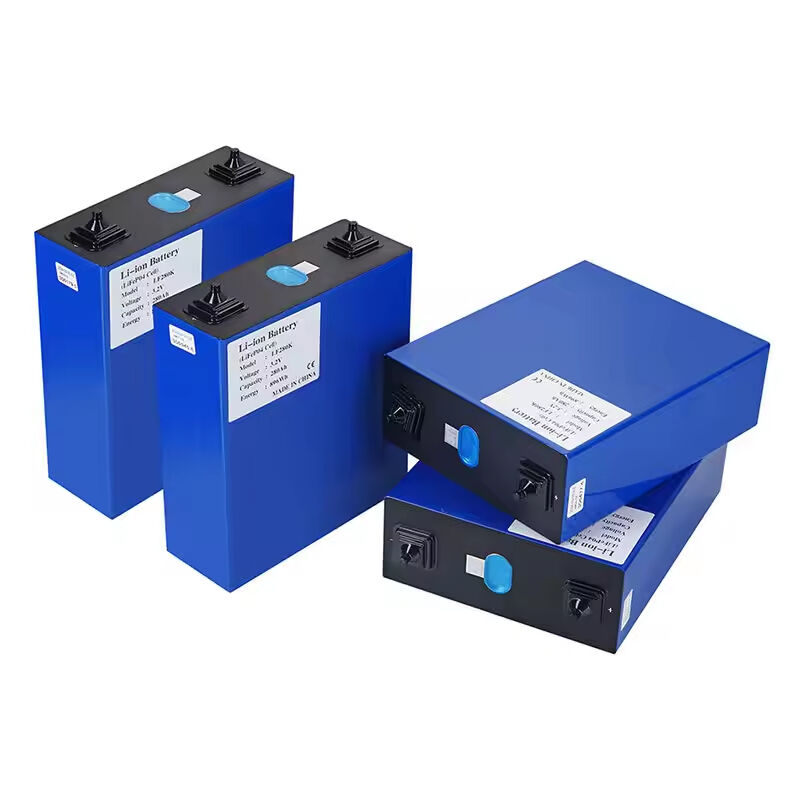
Voltage and Internal Resistance Matching for Battery Cell Consistency
Why mismatched voltage and IR cause pack-level imbalance and accelerated degradation
When there's a mismatch between open circuit voltage (OCV) and internal resistance (DCIR), it creates problems that get worse over time during charging and discharging cycles. Cells with lower DCIR tend to pull much more current when connected in parallel setups, which raises local temperatures anywhere from 8 to 12 degrees Celsius according to research published in the Journal of Power Sources back in 2023. These temperature differences speed up unwanted chemical reactions inside the battery, including things like lithium plating on electrodes and excessive growth of the solid electrolyte interphase layer. Even small differences matter too. Just a 10 millivolt variation in OCV can lead to about 22% capacity loss after only 100 charge cycles in those affected cells. And for batteries connected in series configurations, these kinds of mismatches shrink safety buffers by as much as 40%, making them far more likely to experience dangerous thermal events down the road.
Industry-standard matching tolerances: ±5 mV OCV and ±0.1 mΩ DCIR for reliable battery cell grouping
Leading manufacturers enforce rigorous pre-assembly sorting: OCV deviations are held within ±5 mV, and DCIR variation is constrained to ±0.1 mΩ. This 15:1 DCIR variance ratio limits current imbalance to under 6% in parallel groups (Energy Storage Studies, 2023). Validated testing includes:
- 24-hour voltage stabilization at 25°C
- Four-probe DCIR measurement at 1 kHz
- 0.1C charge/discharge cycling for OCV calibration
Groups meeting these criteria achieve 95% cycle life consistency, with pack-level degradation rates aligned within ±2% across 1,000 cycles. Statistical binning discards outliers, enabling packs to retain >95% of rated energy after five years.
Capacity Grading and Electrical Parameter Validation of Battery Cells
How capacity dispersion >3% triggers premature voltage cutoff in series strings
When cells in a series connected battery pack vary too much in capacity (more than about 3%), something bad happens pretty quickly. The weakest cell gets drained first, which causes problems throughout the whole system. Voltage drops unevenly across the pack and those protective circuits kick in way before they should. What does this mean? A lot of potential energy just sits there unused, sometimes as much as 15% of what could have been available. And here's the really damaging part: once one cell runs out completely, other cells start pushing electricity back into it against normal flow. This reverse charging process makes batteries degrade at least 30%, maybe even 40% faster than when all cells are properly matched together according to how these electrochemical models predict things work over time.
CC/CV testing protocol at 0.2C with traceable 0.5% accuracy—key for battery cell binning
Standardized validation uses Constant Current/Constant Voltage (CC/CV) discharge at 0.2C to uncover true capacity beyond superficial voltage behavior. High-fidelity test systems—with traceable <0.5% measurement uncertainty—enable precision binning across three core parameters:
| Grading Parameter | Target Tolerance | Impact on Performance |
|---|---|---|
| Capacity | ±1.5% | Prevents voltage divergence |
| Internal Resistance | ±0.1 mΩ | Reduces thermal hotspots |
| Energy Density | ±2% | Optimizes pack runtime |
Testing at 25°C ambient reveals early-stage anomalies—including abnormal self-discharge or resistance drift—enabling exclusion of latent defects before assembly. This ensures homogeneous performance groups capable of sustaining >2,000 cycles in high-demand applications.
Self-Discharge and Leakage Current Screening for Battery Cell Reliability
Linking abnormal self-discharge (>2%/month) to micro-shorts and electrolyte aging
When lithium cells experience excessive self-discharge, it usually points to some kind of instability either physically or chemically within the cell structure. The main culprits behind this problem tend to be those pesky metallic impurities like copper or zinc dendrites that manage to work their way through the separator material and cause these tiny short circuits we call micro-shorts. Another big factor is what happens when the electrolyte starts breaking down over time, which leads to more energy being lost than should be happening normally. Looking specifically at LFP cells, anyone monitoring them closely knows that if self-discharge goes above about 2% each month, there's actually around a 37 percent increase in failures reported from large-scale storage installations across different locations. This isn't just theoretical data either - it has real-world consequences for operators managing these massive battery arrays.
72-hour OCV decay + DCIR tracking at 25°C; leakage current <1 µA as pass/fail benchmark
A standardized three-phase screening protocol isolates defective units prior to integration:
- Charge cells to nominal voltage (e.g., 3.65 V for LFP)
- Monitor OCV decay and DCIR stability at 25°C (±1°C) over 72 hours
- Measure leakage current via potentiostatic methods
| Parameter | Pass Threshold | Failure Implication |
|---|---|---|
| OCV drop | <0.5% | Stable electrochemical state |
| Leakage current | <1 µA | No significant ionic contamination |
| DCIR variance | <3% | Consistent electrode integrity |
Cells failing any threshold demonstrate fivefold higher early-life failure rates in field data—making this screening essential for long-term reliability.
Automated Visual and Electrical Integrity Verification for Battery Cells
Verification systems that automate the process give much better quality control when they combine detailed visual checks with extremely accurate electrical testing at the milliohm and microamp level. The AI behind these vision systems can spot all sorts of problems on the surface, like dents, scratches, and leftover electrolyte, even when looking at shiny pouch cells that reflect light. At the same time, the electrical tests built into these systems check things like open circuit voltage, direct current internal resistance, and how well the cell is isolated. These tests help find hidden issues before they become big problems, such as tiny shorts inside or weak seals. By using both visual and electrical methods together, manufacturers stop dangerous defects from getting through to the next stage of assembly, so only cells that meet all requirements actually get put into production.
FAQ
What happens if there's a mismatch in voltage and internal resistance in battery cells?
A mismatch between voltage and internal resistance leads to accelerated degradation and imbalance in battery packs, raising the temperature and increasing the risk of thermal events.
Why are the industry standards for OCV and DCIR matching important?
The industry standards ensure reliable battery cell grouping and maintain the performance and safety of battery packs by keeping deviations within acceptable limits.
What role does capacity grading play in battery performance?
Capacity grading prevents voltage divergence and ensures uniform drainage across the pack, helping in prolonging the lifespan of battery cells.
How does excessive self-discharge affect battery reliability?
Excessive self-discharge indicates instability in the battery cell, leading to an increase in failure rates and reduced efficiency over time.
What methods are used to screen for self-discharge and leakage current?
A three-phase screening protocol involving OCV decay, DCIR tracking, and leakage current measurement is used to ensure battery reliability before integration.
Table of Contents
- Capacity Grading and Electrical Parameter Validation of Battery Cells
- Self-Discharge and Leakage Current Screening for Battery Cell Reliability
- Automated Visual and Electrical Integrity Verification for Battery Cells
-
FAQ
- What happens if there's a mismatch in voltage and internal resistance in battery cells?
- Why are the industry standards for OCV and DCIR matching important?
- What role does capacity grading play in battery performance?
- How does excessive self-discharge affect battery reliability?
- What methods are used to screen for self-discharge and leakage current?