 EN
EN

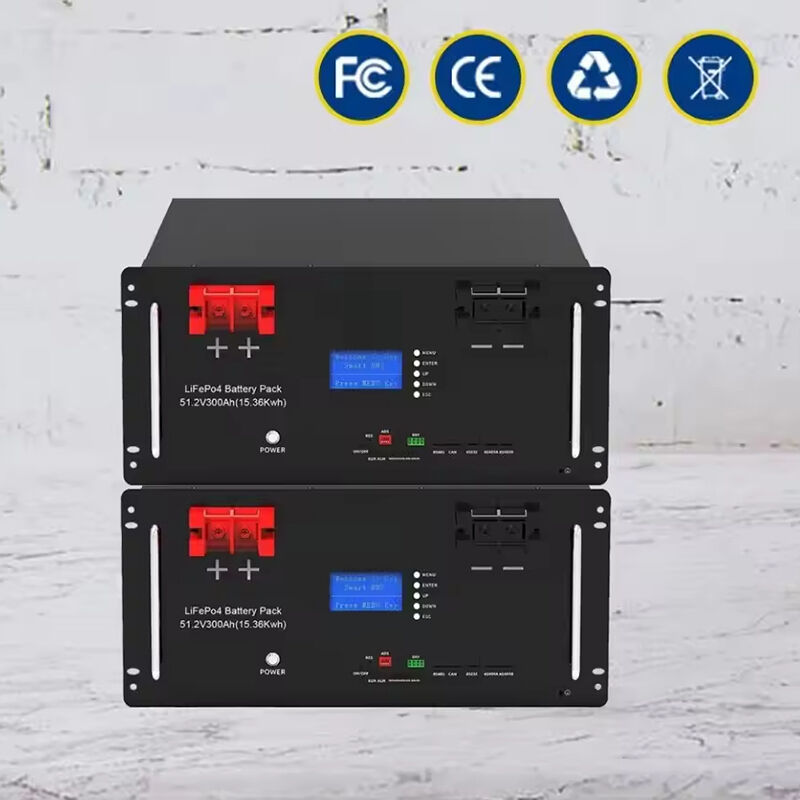
Selecting the Right Battery Chemistry and Cell Format for Industrial Battery Packs
LFP vs. NMC: Safety, Cycle Life, and Energy Density Trade-offs in Industrial Battery Packs
In industrial battery packs, Lithium Iron Phosphate (LFP) and Nickel Manganese Cobalt (NMC) stand out as the main players, each tailored for specific needs. LFP batteries have remarkable thermal and chemical stability, which makes them especially suitable for places where safety matters most, like hospitals, server farms, and factories running hot. The strong phosphate oxide bonds in LFP resist breaking down when overcharged or exposed to heat, so there's almost no risk of dangerous thermal runaway incidents. These batteries typically last between 2000 to 3000 charge cycles before dropping to 80% capacity, making them great for infrastructure projects needing long service life. However, they pack less energy per kilogram (around 90-160 Wh/kg) compared to NMC cells (which reach 200-250 Wh/kg), meaning LFP systems take up more space and weigh more for the same amount of stored electricity. On the flip side, NMC gives better power output and higher energy density, but comes with its own challenges. These batteries need careful temperature control and constant monitoring at the cell level to prevent dangerous reactions if something goes wrong. Real world data from large scale storage installations tells us that LFP failures happen at less than 0.02%, while NMC failures sit around 0.1% according to Industrial Power Systems research from 2023. When looking at applications where lasting performance, safety record, and overall costs matter more than available space, LFP remains the go to option for most professionals in the field.
Cylindrical, Prismatic, or Pouch Cells: Mechanical Integrity, Thermal Behavior, and Scalability for Industrial Battery Packs
Cell format significantly influences mechanical resilience, thermal response, and system integration—factors that directly impact reliability in industrial settings.
| Format | Mechanical Strength | Heat Dissipation | Scalability | Space Efficiency |
|---|---|---|---|---|
| Cylindrical | High (steel casing) | Excellent (radial cooling) | Modular | Low (60–70% pack density) |
| Prismatic | Moderate (aluminum casing) | Moderate (requires thermal pads) | Stackable | High (80–90% density) |
| Pouch | Low (laminate film) | High (surface cooling) | Customizable | Highest (95%+ density) |
Cylindrical cells, take the 21700 for example, perform really well in those tough environments with lots of vibration such as mobile machinery and equipment used for moving materials around. According to research published in the Journal of Power Sources back in 2023, these cells keep about 95% of their capacity even after going through 500 charge cycles while being subjected to continuous 10G vibrations. The standard shape makes them easy to replace and maintain in modules, although they do take up more space compared to other options. Prismatic cells strike a nice middle ground somewhere between cylindrical and pouch designs. Their flat shapes work great when stacking together for things like telecom backup systems or uninterruptible power supplies. But there's a catch too since heat expansion means we need just right clamps and special materials at the interfaces. Pouch cells pack the most energy into the smallest space possible which matters a lot for robots working in tight spots or handheld industrial tools. However, these need strong outer cases to prevent them from swelling over time and to keep everything mechanically stable. When picking which type to use, consider what kind of stresses the application will face. Go with cylindrical if durability is key, prismatic when scalability and ease of maintenance matter most, and save pouch cells for situations where space limitations make all that extra engineering worthwhile.
Designing Series-Parallel Configurations to Meet Voltage, Capacity, and Redundancy Requirements
When designing industrial battery packs, engineers need to think beyond just hitting voltage and capacity numbers. They have to build in reliability too. Connecting cells in series boosts voltage while keeping the same amp-hour rating. Take four 3.2V lithium iron phosphate cells connected end to end and suddenly we get a 12.8V module. Going parallel instead scales up how much power can be delivered at the same voltage level. Most real world setups actually mix these approaches. First they create series groups of cells, then connect multiple groups together in parallel to hit their target specs. This combination gives some built in protection against failures. If one cell goes bad in a parallel group, the overall capacity drops only slightly, and the battery management system steps in to isolate the problem area so everything else keeps running safely. For systems where downtime isn't an option like backup power in hospitals or stabilizing small grids, many designers go even further with what's called N+1 redundancy. That means adding an extra parallel group just in case something fails elsewhere. Temperature control matters a lot too across all these parallel groups. Keep things too hot or too cold between different sections and problems start piling up fast. Good design balances three main things: getting exactly the right electrical output, making sure the pack lasts longer when parts fail, and allowing technicians to replace individual cells or modules without tearing apart the whole system.
Ensuring Long-Term Reliability with Robust Thermal and Safety Architecture
Passive vs. Active Thermal Management: Field Performance Insights from 50+ C&I Industrial Battery Pack Deployments
Proper thermal management isn't just something extra it's actually essential for keeping industrial battery packs working reliably over time. Passive approaches like thermal interface materials, heat spreaders, and relying on natural convection do cut initial costs around 15%, but they often can't keep cell temperatures even when things get busy or when ambient conditions rise. On the flip side, active thermal systems such as liquid cooled plates or forced air ducting provide much better temperature control during those intense cycling periods, especially noticeable during hot summer days when the grid gets stressed or during long duty cycles. Looking at 55 different commercial and industrial installations showed that active systems made a big difference, improving thermal stability by about half compared to passive ones during stressful situations, and extending battery pack life by roughly 40% in data centers where backup power matters most. What makes active cooling really stand out though is how it stops thermal runaways from spreading by pulling away heat fast before small problems turn into bigger failures. When dealing with industrial setups needing over ten years of service life or functioning across changing weather conditions, going with active thermal design has become what most experts recommend these days.
Multi-Layer Safety Design: Phase Change Materials, BMS-Level Fault Response, and Thermal Runaway Containment in Industrial Battery Packs
Industrial battery pack safety isn't just about having one good part—it needs multiple layers working together. Phase Change Materials or PCMs placed between modules actually soak up heat when things start getting too hot early on. This buys valuable time before temperatures spike dangerously high, giving the Battery Management System (BMS) a chance to step in. When problems occur, the BMS has to act fast, often within milliseconds. It will disconnect contacts, stop trying to balance cells, and isolate any damaged ones automatically, no human needed. To round out the protection, there are physical barriers made from ceramics or materials that expand when heated. These stop fires from spreading between modules, keeping flames and debris contained. Looking at actual installations around the world, over 50 different setups have shown something remarkable: combining these three approaches cuts down fire risks by almost 90% compared to systems that only rely on basic BMS checks or simple vents. Industry experts now consider this multi-layer approach standard practice according to safety guidelines like UL 9540A and IEC 62619. For companies operating in areas such as healthcare facilities or other critical infrastructure where safety regulations are strict, following these layered protection methods isn't just recommended—it's practically mandatory.
Integrating Intelligent BMS and Meeting Regulatory Standards for Commercial Battery Pack Deployment
Beyond Monitoring: High-Accuracy SOC/SOH Estimation Under Real-World Partial-Load Cycling for Industrial Battery Packs
Traditional methods for estimating State of Charge (SOC) based on voltage readings struggle in industrial settings where equipment runs at partial capacity, starts and stops throughout shifts, or operates intermittently with duty cycles ranging from 30 to 70 percent. This kind of operation creates voltage hysteresis effects and polarization errors that throw off measurements. As a result, SOC estimates can drift by about 15% either way, causing batteries to shut down too early or fail unexpectedly when they shouldn't. The newer generation of industrial Battery Management Systems (BMS) tackles these issues using electrochemical modeling algorithms instead. These systems manage to keep SOC errors below 3% even when discharge patterns are all over the place. Three main technological advances make this possible. First, there's the adaptive Kalman filter technology which adjusts automatically for temperature changes that affect hysteresis. Second, we have coulomb counting techniques backed by current sensors that are accurate to around 99.5%. And third, machine learning models analyze how batteries degrade over time through their unique aging patterns to adjust for capacity loss after thousands of charge cycles. Looking at State of Health (SOH) estimation too, tests conducted over 5,000 actual operating cycles show these systems predict battery end-of-life within just 2% accuracy, slashing unplanned downtime by about 40%. None of these features are nice-to-have extras anymore. The latest version of IEC 62133-2 from 2023 requires industrial battery packs to report SOC within a 5% margin of error during dynamic load situations. Real world data from large scale energy storage installations demonstrates that smart BMS solutions actually prolong battery pack lifespan by roughly 2.8 years on average. This extension directly boosts return on investment while also lowering the overall environmental footprint throughout the product's life cycle.
FAQ Section
What are the main differences between LFP and NMC batteries in industrial applications?
LFP batteries offer greater thermal and chemical stability, making them ideal for environments where safety is paramount. They also have a longer cycle life. NMC batteries, however, provide higher energy density and power output but require more careful temperature control.
How do cylindrical, prismatic, and pouch cells differ in industrial settings?
Cylindrical cells are known for their high mechanical strength and excellent heat dissipation, making them suitable for vibrating environments. Prismatic cells offer moderate mechanical strength and stackability, and pouch cells provide high space efficiency but require additional casing for structural integrity.
Why is thermal management crucial for industrial battery packs?
Thermal management is essential to ensure the reliability and longevity of battery packs. While passive management is cost-effective, active thermal systems offer improved thermal stability, particularly in demanding environments, reducing the risk of thermal runaways.
What does a multi-layer safety design in battery packs entail?
A multi-layer safety design involves using phase change materials, BMS-level fault response, and containment barriers to mitigate risks of fires and failures. This approach is considered standard practice and reduces fire risks significantly.
How do modern BMS solutions ensure battery longevity and reliability?
Modern BMS solutions utilize electrochemical modeling, adaptive Kalman filters, and machine learning to accurately estimate SOC and SOH, correcting errors from traditional methods. These enhancements extend battery lifespan and improve overall performance under dynamic conditions.
Table of Contents
- Selecting the Right Battery Chemistry and Cell Format for Industrial Battery Packs
- Designing Series-Parallel Configurations to Meet Voltage, Capacity, and Redundancy Requirements
- Ensuring Long-Term Reliability with Robust Thermal and Safety Architecture
- Integrating Intelligent BMS and Meeting Regulatory Standards for Commercial Battery Pack Deployment
-
FAQ Section
- What are the main differences between LFP and NMC batteries in industrial applications?
- How do cylindrical, prismatic, and pouch cells differ in industrial settings?
- Why is thermal management crucial for industrial battery packs?
- What does a multi-layer safety design in battery packs entail?
- How do modern BMS solutions ensure battery longevity and reliability?