 EN
EN

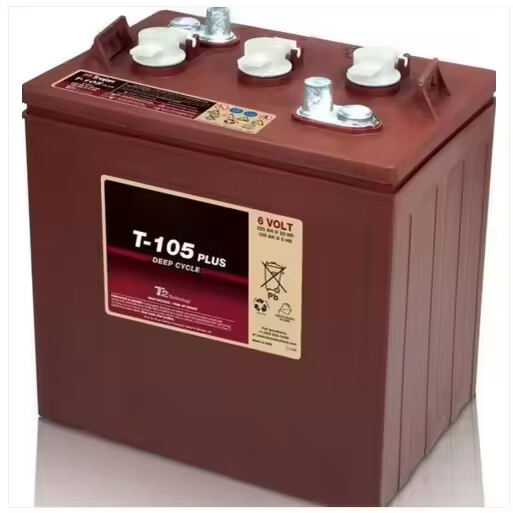
Understanding the Typical Lifespan of a Lead Acid Replacement Battery
Average Lifespan Under Standard Operating Conditions
Most lead acid replacement batteries will last around 3 to 5 years when kept in moderate conditions between 20 and 25 degrees Celsius with regular checkups. The better quality options such as AGM batteries tend to stick around longer though, often making it to 5 or even 7 years because they're built differently which helps prevent those annoying acid separation issues. When exposed to really hot environments above 35 degrees Celsius or subjected to constant deep discharges, performance takes quite a hit dropping somewhere between 20 and 30 percent faster than normal. For batteries that get used every day at about half their capacity, expect to see capacity loss of roughly 15 to 20 percent each year. Standby applications where the battery isn't constantly being drained only experience about 5 to 10 percent loss annually.
Cycle Life and State of Health (SOH) Metrics for Lead-Acid Batteries
Most lead acid batteries last around 500 to 1,000 complete charge and discharge cycles before their performance drops below 80% of original capacity, which is generally considered the point where they need replacing. Every time a battery goes through a full discharge cycle, it loses some of its active materials, cutting down on overall capacity by roughly 0.1 to 0.3 percent each time. That's why many manufacturers suggest only partially discharging these batteries between 30 and 50 percent instead. Doing so can actually double or even triple their useful lifespan in some cases. For those keeping track, regular voltage measurements are important too. A healthy fully charged battery should read about 12.7 volts, while something sitting at half charge would typically measure around 12 volts. Checking the specific gravity of the electrolyte solution with a hydrometer also gives valuable insight into how well the battery is holding up over time.
Battery Capacity Degradation Over Time and When to Consider Replacement
Capacity loss follows a nonlinear pattern: 5–10% annually in the first 2–3 years, accelerating to 15–20% thereafter. Replace the battery when:
- Capacity drops below 60–70% of original rating
- Recharge times increase by 30% or more
- Resting voltage remains below 12.4V despite proper charging
Operating below 50% capacity increases the risk of terminal sulfation, which permanently impairs energy storage.
Key Factors That Influence Lead Acid Replacement Battery Longevity
Three critical variables determine how long your lead acid replacement battery will deliver reliable power: environmental conditions, usage patterns, and proactive upkeep. While manufacturers typically claim 3–5 years of service life, real-world performance often varies by ±40% depending on these factors.
Impact of Temperature on Lead Acid Battery Lifespan
When it comes to battery health, heat is definitely a major problem. The temperature really makes a difference too every time there's a 10 degree Celsius jump above room temperature, about 77 degrees Fahrenheit, things start going downhill fast. Internal corrosion speeds up twice as much while water loss triples in these flooded lead acid batteries according to Battery University research from last year. Looking at aging test results paints an even clearer picture. Batteries running at around 35 degrees Celsius hit that critical 80% state of health mark almost two years sooner compared to ones kept cooler at 20 degrees. For anyone dealing with stationary battery setups, making sure there's good airflow and proper cooling isn't just recommended it's absolutely necessary if they want their investment to last longer.
Charge/Discharge Cycles and Their Effect on Long-Term Performance
The depth of discharge (DoD) affects how long a battery lasts before needing replacement. When batteries are regularly discharged to around 50%, they typically last about 1,200 charge cycles. But if someone pushes them to 80% discharge each time, that lifespan drops dramatically down to roughly 400 cycles instead. That's almost a two-thirds reduction in useful life. Many solar storage systems operate at partial state-of-charge (PSoC), which unfortunately leads to sulfation problems over time. The good news is newer charge controllers featuring adaptive three stage charging processes actually extend battery life compared to older methods relying solely on basic voltage regulation. Industry tests show these advanced controllers boost cycle life somewhere between 15% and 20%, making them worth considering for anyone looking to maximize their investment.
Maintenance Practices and How They Affect Replacement Frequency
Skipping those monthly specific gravity tests for flooded batteries leads to acid stratification problems down the road. This issue alone can cut battery capacity by around 30% in just half a year if left unchecked. Cleaning terminals every three months stops resistance from building up, something that creates voltage drops over 0.2 volts when power demands increase. For VRLA batteries specifically, regular maintenance really makes a difference. These valve regulated lead acid units typically last between five to eight years in telecom backup applications when cared for properly. But watch out folks, neglect them and they'll barely make it past two or three years instead. Maintenance isn't optional here, especially since these batteries form such critical parts of our infrastructure systems.
Real-World Performance of VRLA as a Lead Acid Replacement Battery
Service Life and Reliability of VRLA Batteries in Industrial and Backup Applications
VRLA batteries are pretty dependable for backup power in industrial environments, typically lasting around 3 to 5 years if kept in good conditions. They work especially well in places like telecom facilities and data centers where they keep systems running during power cuts, provided the temperature stays somewhere between 68 and 77 degrees Fahrenheit. Some field tests have shown that these batteries tend to lose about 15 to maybe even 20 percent of their capacity after going through roughly 200 to 300 charge cycles. This makes them less ideal for applications requiring frequent cycling such as solar energy storage systems where performance degradation becomes noticeable over time.
Heat remains a key constraint—operation at 35°C (95°F) cuts lifespan by 50% compared to climate-controlled environments. Despite requiring replacement every 3–4 years in demanding roles such as hospital UPS systems, VRLA batteries remain popular due to their lower upfront cost and compatibility with existing infrastructure.
Degradation Phases and Cycle Stability in Sealed Lead-Acid Systems
VRLA batteries undergo three distinct degradation phases:
- Initial Stabilization (0–50 cycles): 5–8% capacity loss as active material settles
- Linear Decline (50–300 cycles): Gradual 0.1–0.3% loss per cycle
- Accelerated Failure (>300 cycles): Rapid voltage drops and electrolyte drying
Maintaining absorption charging voltages between 14.4–14.8V prevents excessive gas venting. While VRLA’s recombinant design minimizes water loss, deep discharges below 50% state of charge increase failure risk. Industrial users enhance longevity through:
- Automated temperature-compensated charging
- Monthly cell voltage monitoring
- Annual capacity testing to detect weak units
Although lithium-ion technologies offer longer cycle life, VRLA remains viable for short-duration backup due to its cost-effectiveness and integration with legacy systems.
Lifespan Comparison: Lead Acid Replacement Battery vs. Lithium-Ion (LiFePO4)
Cycle Life and Longevity: LiFePO4 Versus Traditional Lead-Acid
LiFePO4 batteries can last between 3,000 to 6,000 full charge cycles, which is roughly six times longer than the usual 500 to 1,000 cycles we see with traditional lead acid batteries according to industry reports from 2024. The reason for this difference lies in the chemical stability of lithium iron phosphate, making it much better at handling repeated deep discharges without breaking down over time. Take a look at actual performance numbers: most LiFePO4 units still have around 80% of their original capacity after going through 2,000 complete charge cycles. Compare that to standard lead acid options that frequently drop below half their initial capacity after only 500 such cycles. These figures highlight why many manufacturers are switching to LiFePO4 technology despite higher upfront costs.
| Battery Type | Cycle Life | Depth of Discharge (DoD) |
|---|---|---|
| LiFePO4 | 3,000 - 6,000 | 80-90% |
| Lead-Acid | 500 - 1,000 | 50% |
Performance Under Repeated Charge/Discharge Cycling
LiFePO4 operates efficiently at 80–90% DoD, effectively doubling usable capacity per cycle compared to lead-acid’s 50% DoD limit. This resilience reduces stress in high-cycle applications like solar storage and electric vehicles. In contrast, lead-acid batteries suffer accelerated sulfation and plate corrosion under similar conditions, shortening lifespan by 40–60%.
Total Cost of Ownership and Long-Term Replacement Implications
Although LiFePO4 batteries cost 2–3 times more upfront, their 8–10 times longer service life reduces replacement frequency and maintenance needs. Over 10 years, a LiFePO4 system typically incurs 60% lower total costs due to:
- Fewer replacements (1 vs. 3–5 for lead-acid)
- Minimal maintenance (no water refills or cleaning)
- Higher energy efficiency (95% vs. 80–85% for lead-acid)
For mission-critical systems requiring reliability and long-term savings, LiFePO4 proves a cost-effective lead acid replacement battery despite its higher initial investment.
FAQ
What is the average lifespan of a lead acid replacement battery?
Lead acid batteries generally last between 3 to 5 years under moderate conditions with regular maintenance.
How does temperature impact lead acid battery lifespan?
Higher temperatures accelerate battery degradation and can significantly reduce lifespan. Keeping the temperature below 35 degrees Celsius is advisable.
What factors affect the longevity of lead acid replacement batteries?
Factors like environmental conditions, usage patterns, and regular maintenance play critical roles in determining battery life.
How do LiFePO4 batteries compare to lead acid in terms of cycle life?
LiFePO4 batteries offer a cycle life between 3,000 to 6,000, significantly longer than the 500 to 1,000 cycles typical of lead acid batteries.
What is sulfation, and why is it a concern for lead acid batteries?
Sulfation occurs when lead sulfate crystals build up in the battery due to incomplete discharge cycles, leading to reduced capacity and efficiency.
Table of Contents
- Understanding the Typical Lifespan of a Lead Acid Replacement Battery
- Key Factors That Influence Lead Acid Replacement Battery Longevity
- Real-World Performance of VRLA as a Lead Acid Replacement Battery
- Lifespan Comparison: Lead Acid Replacement Battery vs. Lithium-Ion (LiFePO4)
-
FAQ
- What is the average lifespan of a lead acid replacement battery?
- How does temperature impact lead acid battery lifespan?
- What factors affect the longevity of lead acid replacement batteries?
- How do LiFePO4 batteries compare to lead acid in terms of cycle life?
- What is sulfation, and why is it a concern for lead acid batteries?