 EN
EN

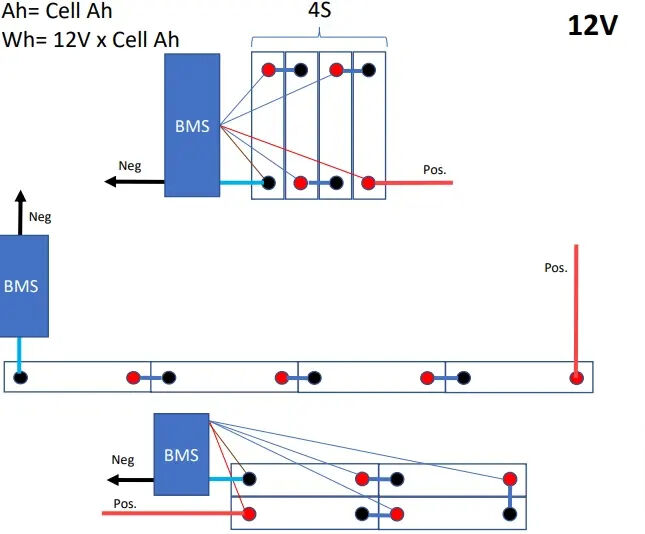
Understanding Series Connection in LiFePO4 Prismatic Batteries
How Series Configuration Increases Voltage While Maintaining Capacity
Connecting LiFePO4 prismatic batteries in series combines their voltages while maintaining the same capacity. For example:
- Four 3.2V cells in series produce 12.8V
- A 100Ah cell group retains 100Ah capacity
This setup is ideal for applications needing higher voltage, such as solar energy storage and electric vehicles. Unlike parallel connections that increase capacity, series wiring multiplies voltage without altering the energy density per cell. Thermal stability remains consistent across the chain because current flow is uniform through all cells.
Step-by-Step Wiring: Connecting Negative to Positive Terminals
- Align cells in sequence with terminals accessible
- Connect negative (-) of Cell 1 to positive (+) of Cell 2 using copper busbars
- Repeat until all cells are linked in a continuous chain
- Insulate connections with heat-shrink tubing
- Verify polarity with a multimeter before finalizing
Critical safety checks:
- Maintain terminal gaps of at least 5mm to prevent arcing
- Torque all bolts to manufacturer specifications (typically 4–6 Nm)
Incorrect wiring increases the risk of thermal runaway, a leading cause of failure in energy storage systems (NFPA 2023).
Ensuring Battery Uniformity for Reliable Series Performance
Matching Capacity, Voltage, Age, and Specifications in LiFePO4 Prismatic Cells
To get good results when connecting LiFePO4 prismatic cells in series, there are several important factors that need matching up. These include capacity measured in amp hours (Ah), voltage levels (V), how old the cells are based on cycle counts, and following what the manufacturer specifies. When there's a capacity gap bigger than 5%, the stronger cells end up doing extra work which wears them out faster over time. If voltage differences go beyond 0.05 volts when fully charged, this creates problems during discharge cycles where some cells drain quicker than others. Production batch variations can cause differences in internal resistance too, leading to hot spots forming in certain cells while others stay cooler. Before putting together any battery pack, it makes sense to check those manufacturer specs sheets carefully for details on internal impedance values and how much they lose charge naturally over time. This kind of preparation helps avoid headaches down the road.
Real-World Impact: Case Study on Mismatched Cells and Performance Loss
A 2023 analysis of mismatched LiFePO4 prismatic batteries in a 24V system paired a new 100Ah cell with an 85Ah unit (15% variance), resulting in:
- 22% drop in total capacity (down to 66Ah)
- 300-cycle reduction in lifespan
- 47% more frequent BMS interventions
The weaker cell failed after 1.7 years–40% sooner than matched pairs. This underscores that consistent age and capacity are essential for long-term reliability in series configurations.
The Critical Role of BMS in Series-Connected LiFePO4 Prismatic Batteries
Voltage Monitoring and Cell Balancing with a Battery Management System
Battery Management Systems (BMS) play a really important role when it comes to keeping series connected LiFePO4 prismatic batteries stable. These systems constantly check each individual cell's voltage levels and can spot when there are imbalances caused either by slight manufacturing variations or simply because some cells age faster than others. If the voltage differences get too big, usually somewhere between 20 and 50 millivolts, then the BMS kicks in with what's called passive balancing. This basically means it gets rid of extra charge using resistors. For those high efficiency applications such as solar power storage installations, we see something different happening though. Active balancing actually moves energy around between cells which cuts down on wasted electricity. According to industry data, this approach can prevent losses of around 15% in available battery capacity while also helping slow down overall battery wear and tear over time. Another key function of the BMS is setting strict voltage boundaries. The system will shut itself off completely if any single cell goes above 3.65 volts during charging or falls below 2.5 volts when discharging.
Can a BMS Prevent Overcharging? Addressing Limitations and Best Practices
While a BMS prevents overcharging by cutting off the circuit when voltage thresholds are breached, it has limitations. Voltage calibration drift or sensor failure can delay response. High-current charging may also cause localized overheating before the BMS reacts. To enhance safety:
- Integrate temperature sensors with voltage monitoring
- Calibrate BMS thresholds quarterly
- Use chargers with independent voltage control
- Implement redundant shutdown mechanisms
Best practices include installing insulated busbars and conducting monthly polarity checks. Although a BMS significantly improves safety, it cannot overcome poor system design or severely mismatched cells.
Safety Best Practices for Series Connection of LiFePO4 Prismatic Batteries
Insulation, Polarity Checks, and Grounding to Prevent Short Circuits
When working with LiFePO4 prismatic batteries wired in series, proper insulation of all terminals becomes absolutely necessary. Non-conductive covers work well, or alternatively, high temp tape can be used to stop any unwanted contact between battery terminals and nearby metal parts. Before turning on the power, it's smart practice to double check the polarity using a good quality multimeter. Getting things backwards here could trigger dangerous thermal runaway conditions. For safety reasons, connect the entire battery bank to a single earth point somewhere reliable. This helps minimize those pesky stray voltages and reduces risk of arc flashes during operation. Keep at least 10mm space between conductors for every 100 volts present in the system. Also watch out for cable tension near terminal points since this can create problems over time. All these precautions matter because short circuits remain responsible for around three quarters of all lithium battery failures according to recent data from the Energy Storage Safety Council in their 2023 report.
Modern Safety Trends: Insulated Busbars and Modular Connectors
Many modern electrical setups now rely on insulated copper busbars that come with those handy snap-on PVC covers. This approach gets rid of all those exposed wires we used to see everywhere and helps spread out the electricity more evenly throughout the system. The newer pre-assembled connector modules take things even further. They have those nice color codes showing which side is positive or negative, plus special locks that stop people from tightening them too much. According to some recent research published in Renewable Tech Journal last year, these kinds of systems cut down on mistakes made during installation by around 40 percent when compared to old fashioned manual wiring methods. Add in the requirement for dielectric tests right before putting everything into operation, and suddenly we're looking at a whole new level of safety standards specifically for those high voltage LiFePO4 battery arrays that are becoming so popular these days.
FAQ
What are the advantages of connecting LiFePO4 prismatic batteries in series?
Connecting LiFePO4 prismatic batteries in series increases voltage while maintaining capacity, ideal for applications requiring higher voltage like solar energy storage and electric vehicles.
How does a Battery Management System (BMS) help in series-connected battery systems?
A BMS monitors voltage levels for each cell and balances energy to prevent imbalances, thereby improving stability and reducing wear over time.
What safety practices should be followed when connecting LiFePO4 batteries in series?
Proper insulation, regular polarity checks, and grounding are essential to prevent short circuits. Following modern trends like insulated busbars and modular connectors can also enhance safety.